
Precision in woodworking and construction doesn’t happen by accident. The tools you choose, and how well you understand them, determine whether your finished work looks polished or rough. Among handheld power tools, the circular saw offers some of the highest potential for accurate, efficient cutting—but only when you know what to look for. This guide focuses on the features that actually matter in practice, cutting through marketing language to help you choose with confidence.
Starting with the Right Foundation: Saw Type and Use Case
Before evaluating features, define your primary use case. Circular saws span a broad spectrum—from compact trim saws designed for finish work to worm-drive models built for sustained heavy-duty performance. Each category makes engineering tradeoffs that favor particular applications.
Sidewinder (inline) saws place the motor parallel to the blade and are lighter and more maneuverable. Worm-drive saws position the motor behind the blade, providing more torque and better visibility of the cut line from certain angles. For most general-purpose users, an inline saw is the more practical choice. Professionals in framing or roofing often prefer the power delivery of a worm-drive model.
Motor Design: Brushed vs. Brushless
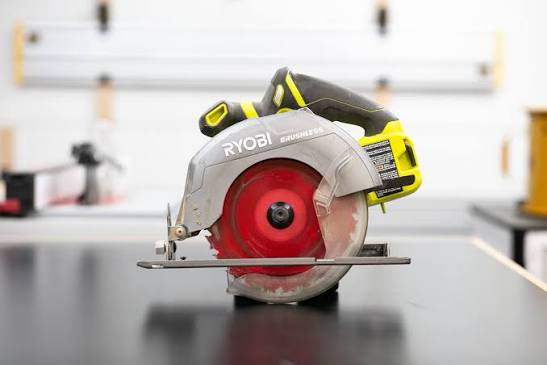
This distinction matters more than many buyers realize. Brushed motors are the traditional design—effective, but subject to gradual wear on the carbon brushes that transfer electrical current to the motor’s rotating components. Brushless motors eliminate this wear point entirely by using electronic commutation instead.
The practical benefits of brushless motors include longer tool life, more efficient power conversion, reduced heat generation, and quieter operation. Cordless saws with brushless motors also extract significantly more cuts per charge from the same battery. The upfront cost is higher, but the long-term value is well established.
Spindle Lock and Blade Change Convenience
Blade changes are a routine part of using a circular saw, and how quickly and safely you can perform them affects your overall workflow. A spindle lock mechanism holds the blade arbor stationary while you loosen the blade bolt—making single-wrench blade changes possible without needing to wedge the blade in place.
Some saws offer tool-free blade change systems that eliminate the wrench entirely. For users who frequently switch between blade types—say, between a ripping blade and a fine crosscut blade—this feature saves meaningful time over the course of a project.
Depth Adjustment Mechanism Quality
Cutting depth adjustment is used every time you set up a new cut. The quality of this mechanism—how smoothly it moves, how securely it locks, and how easy the scale is to read—affects every session with the tool.
Lever-style depth locks are faster to operate than threaded knob systems, though knob systems often provide finer adjustment control. The best designs offer both: a quick-release lever for coarse adjustment and a tightening mechanism that locks the depth precisely without play or drift.
Sight Lines and Cut-Line Visibility
Following a pencil line accurately depends on how clearly you can see the blade’s path from the operator position. Different saws address this in different ways—some use a notch in the front of the base plate aligned with the blade, while others include a laser guide that projects a visible line ahead of the cut.
Laser guides can be useful, but their accuracy depends on regular calibration and adequate lighting conditions. In bright outdoor environments, laser lines can be difficult to see. A well-designed physical sight notch, calibrated at the factory, is often more reliable in varied conditions.
Base Plate Design and Material
The shoe—the flat plate that contacts your workpiece—is the foundation of every cut. Its flatness, material, and adjustability directly influence the accuracy you can achieve.
Cast aluminum and magnesium shoes are the premium options. They resist warping under heat and impact, maintaining a flat bearing surface over years of use. Stamped steel shoes are common in budget saws and acceptable for light use, but they’re susceptible to bending if the saw is dropped or used roughly.
Check that the shoe’s front edge aligns precisely with the blade’s cut path. Misalignment here means that following a pencil line with the front of the shoe produces cuts that drift from the intended position.
Handle Placement and Operator Control
The position and shape of the main handle affects how naturally the saw tracks along a cut line. Rear handles positioned directly in line with the blade require deliberate steering to maintain direction. Top handles placed higher and further back give the operator more leverage for directional control.
Secondary handle placement (the front D-handle or front grip) also matters, particularly for two-handed cutting over long distances. A secondary grip that positions your hand directly above the cut path gives you better downward pressure and directional control simultaneously.
Dust Port and Vacuum Compatibility
Dust control in a workshop environment is both a health and accuracy concern. A saw that channels its waste efficiently to a dust bag or shop vacuum keeps your cut line clear and reduces airborne particles in your breathing zone.
Look for dust ports designed to accept standard vacuum hose fittings without an adapter. Some saws include adapters in the box; others require third-party solutions that fit imperfectly and reduce suction efficiency.
Vibration Isolation Technology
Sustained vibration from a circular saw transfers to your hands and arms, contributing to fatigue and reducing fine motor control over long cutting sessions. Anti-vibration features—rubberized handle inserts, isolated motor mounts, and balanced blade designs—reduce this transfer meaningfully.
When evaluating two saws of similar specification, the one with better vibration management will consistently produce more accurate cuts during extended use, simply because the operator remains fresher and more in control.
Putting It All Together
The best circular saw for your needs is the one that aligns with your specific workload, your budget, and the features that actually affect your day-to-day cutting. Motor quality, base plate rigidity, depth adjustment ease, and vibration management are the pillars of a saw that performs reliably over time.
Handle the tool before you buy it if at all possible. Weight distribution, grip comfort, and sight line visibility are difficult to assess from a specification sheet alone—but they’re among the most important factors in real-world cutting performance.
